
Low FODMAP eating for IBS doesn't have to be boring — here's proof
By Christine Jones-Howard, RDN CDN · Nutritionist for Health
Upon learning about the low FODMAP diet, most people picture bland chicken and plain rice. They worry they'll have to give up flavor, variety, and the simple pleasure of enjoying a meal.
But eating low FODMAP can be genuinely delicious. With the right ingredients and a little creativity, meals can be vibrant, satisfying, and full of flavor — while keeping your symptoms at bay. These two recipes are ones I share with my own patients, and they never disappoint.
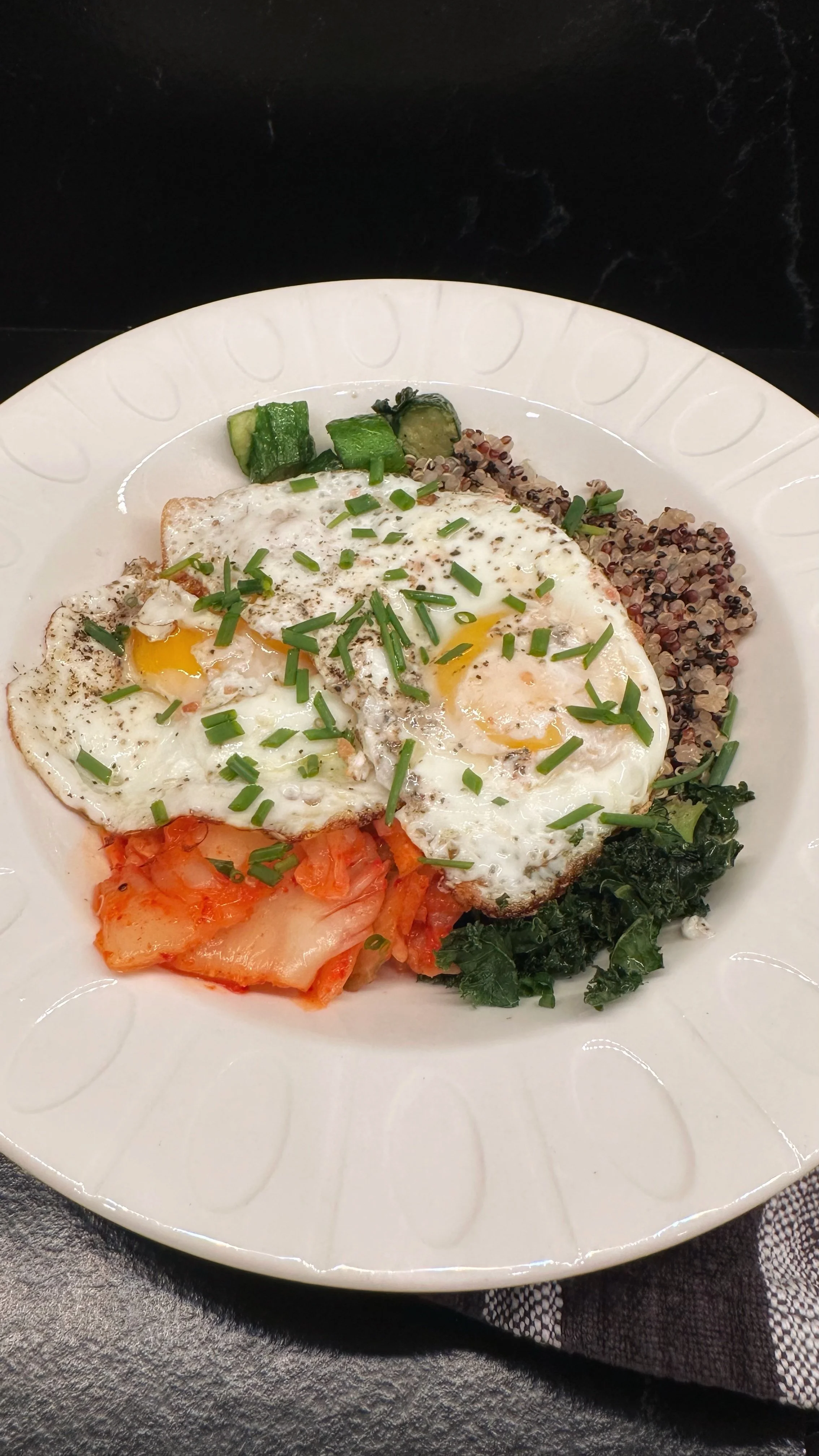
1. Quinoa egg bowl
Calories: 425, Carbs: 41g, Protein: 24.5g, Fiber: 8g · With fruit: Calories: 470, Carbs: 52g, Protein: 25g, Fiber: 10.4g
This bowl has everything — color, texture, protein, and flavor. The sriracha adds heat, the chives or scallion greens add freshness, and the kimchi option brings a bold fermented kick that's also great for your gut microbiome. This is not diet food. This is a meal you'll actually look forward to.
What you need:
½ cup cooked quinoa
2 large eggs
1 tsp olive oil
¼ cup raw spinach or kale
¼ cup diced zucchini or ⅓ cup kimchi
1 tbsp chia seeds
1 tbsp chopped chives or green parts of scallions (optional)
1 tsp sriracha (optional)
How to make it:
Cook or microwave quinoa according to package instructions. Sauté spinach or kale and zucchini in olive oil until softened. If using kimchi instead of zucchini, add it directly to the bowl from the container — no cooking needed. Fry or poach eggs to your liking. Assemble in a bowl — quinoa first, then vegetables and/or kimchi, then eggs. Top with chia seeds and chives or scallion greens.
Serve with:
½ cup sliced strawberries and ¼ cup blueberries on the side — both are low FODMAP and add natural sweetness and antioxidants without triggering symptoms.
A note on kimchi: kimchi is fermented cabbage and can be a wonderful probiotic-rich addition for some IBS patients. However it is spicy and may not be well tolerated by everyone — start with a small amount and see how you feel.
2. Miso salmon with roasted baby bok choy and carrots
Per serving (serves 2): Calories: 472, Carbs: 15g, Protein: 50g, Fiber: 3g, Saturated Fat: 4g · Per serving (serves 3): Calories: 315, Carbs: 10g, Protein: 34g, Fiber: 2g, Saturated Fat: 2.7g
This dish is a perfect example of how low FODMAP cooking can feel restaurant-worthy. The miso marinade is rich and savory with deep umami flavor. The caramelized carrots add sweetness. The bok choy brings a satisfying crunch. And the salmon — one of the best anti-inflammatory foods you can eat — ties it all together. Nobody sitting down to this meal is going to feel like they're on a restricted diet.
For the salmon:
16 oz salmon fillet
2 tbsp white or yellow miso paste
1 tbsp rice vinegar
2 tsp soy sauce or tamari (gluten-free)
1 tsp pure maple syrup
Salt and pepper to taste
For the vegetables:
2 heads baby bok choy, halved lengthwise
2 medium carrots, peeled and sliced on the diagonal
Olive oil spray
1 tbsp olive oil
Salt and pepper to taste
Instructions:
Preheat oven to 400°F. Line two sheet pans with parchment paper. Place a wire rack on one pan for the salmon.
Mix together the miso paste, rice vinegar, soy sauce, and maple syrup. Season salmon with salt and pepper, then rub the mixture evenly over the fish. Place on the wire rack.
Toss carrots with olive oil, salt, and pepper and spread on the second sheet pan. Place in the oven and roast for 5 minutes.
After 5 minutes, add the baby bok choy cut-side up to the same pan, spray with olive oil and season with salt and pepper. Add the salmon pan to the oven at the same time.
Continue roasting everything for 15–20 minutes until salmon reaches 130°F internally or flakes easily when pressed. Carrots should be tender and caramelized, bok choy slightly wilted with golden edges.
Let salmon rest 5 minutes before serving. Garnish with a squeeze of lime and fresh cilantro if desired.
Tip: use white or yellow miso rather than red — it tends to be milder and easier on sensitive stomachs. Stick to about 1 tablespoon per serving to keep sodium in check.
The bottom line on low FODMAP eating
These two meals are just a glimpse of what low FODMAP eating can look like. There is a whole world of flavorful, satisfying meals that work for IBS — soups, grain bowls, stir fries, salads, snacks, and more. The key is knowing which ingredients to lean on, how to build flavor without common triggers like garlic and onion, and how to adapt recipes you already love.
That's exactly what I help my patients do every day.
Ready to build a low FODMAP plan that actually works for your life?
As a registered dietitian specializing in IBS and gut health, I create personalized meal ideas tailored to your specific symptoms, food preferences, and schedule. If you're in Westchester, NYC, CT, or NJ, I'd love to help. Insurance is accepted.